Allergy Relief During Pregnancy
Allergy and sinus symptoms commonly change during pregnancy, sometimes getting better, sometimes worse, and pregnancy itself can cause its own nasal congestion. There is no single medication that is automatically the right choice for every pregnancy, so the safest path is to talk to your OB provider or pharmacist before starting, continuing, or stopping any allergy medication, including over-the-counter products. Non-medication steps, like trigger avoidance and saline rinses, are reasonable to try in the meantime. If you have allergic asthma, keeping it well controlled during pregnancy is especially important and also deserves clinician guidance.
Quick answer
Allergy and sinus symptoms commonly change during pregnancy, sometimes getting better, sometimes worse, and pregnancy itself can cause its own nasal congestion. There is no single medication that is automatically the right choice for every pregnancy, so the safest path is to talk to your OB provider or pharmacist before starting, continuing, or stopping any allergy medication, including over-the-counter products. Non-medication steps, like trigger avoidance and saline rinses, are reasonable to try in the meantime. If you have allergic asthma, keeping it well controlled during pregnancy is especially important and also deserves clinician guidance.
What you need to know
- Allergy symptoms can improve, worsen, or stay about the same during pregnancy, and hormonal changes can independently cause nasal congestion (sometimes called pregnancy rhinitis).
- No allergy medication can be broadly labeled 'safe' or 'unsafe' for pregnancy on a consumer page; the right choice depends on your trimester, symptoms, and health history, decided together with your OB provider or pharmacist.
- Non-medication measures, such as trigger avoidance and saline nasal rinses, carry no medication-related pregnancy risk and are a reasonable first step for many people.
- If you have allergic asthma, staying well controlled matters during pregnancy; uncontrolled asthma itself carries risks, so undertreating is not automatically the 'safer' choice either.
- Tell your OB provider or pharmacist about every medication, supplement, or 'natural' remedy you're considering, ideally as early in pregnancy as possible.
- Breastfeeding involves separate medication considerations from pregnancy; see our dedicated breastfeeding guide once that stage applies to you.
How Pregnancy Can Affect Allergy and Sinus Symptoms
Pregnancy can change how your body responds to allergens in ways that are hard to predict. Some people find that seasonal or environmental allergy symptoms improve during pregnancy, some find they get worse, and others notice little to no change. There is no way to know in advance which pattern you'll experience, which is one reason it helps to track your symptoms and mention changes at your prenatal visits.
Separately, many pregnant people develop nasal congestion that isn't caused by allergies at all. Increased blood flow and hormonal shifts during pregnancy can swell the nasal passages, producing a stuffy or runny nose sometimes called pregnancy rhinitis. This can look and feel a lot like allergic rhinitis, but the underlying cause is different, which matters because it can affect what kind of relief actually helps. If you're not sure whether your congestion is allergy-related, pregnancy-related, or something else (like a sinus infection), that's a good question for your OB provider rather than a guess. For a broader look at how allergy symptoms typically present, see our allergy symptoms guide.
Why Medication Decisions Can Look Different During Pregnancy
Deciding whether and how to treat allergy symptoms during pregnancy is not a simple safe-or-unsafe question, and this page won't try to sort medications into those two boxes. For many medicines, including common over-the-counter products, there is simply less research data available on use during pregnancy than there is for the general population, and over-the-counter labels typically direct pregnant users to check with a doctor before use rather than giving a blanket answer.
In practice, that means weighing your symptom severity, your trimester, and your broader health history against the current evidence your OB provider or pharmacist has for a specific product. That's a conversation for a clinician, not a general article or a search engine. See our overview of allergy treatment approaches for background, and bring specific product questions to your OB provider or pharmacist.
Non-Medication Steps You Can Try
Because trigger avoidance and other non-drug measures don't carry medication-related pregnancy risk, they're a reasonable place to start for many people, either on their own or alongside anything your provider recommends. These steps won't eliminate every symptom, but they can meaningfully reduce your exposure to common triggers.
For more detail on specific non-drug approaches, see our natural allergy remedies guide.
- Keep windows closed on high-pollen days and rely on air conditioning or filtered indoor air instead.
- Use a HEPA air filter in bedrooms or main living spaces, and vacuum and dust regularly.
- Try saline nasal rinses or sprays to help clear congestion.
- Shower and change clothes after spending time outdoors during allergy season to remove pollen.
- Wash bedding regularly in hot water, and consider allergen-proof covers if dust mites are a known trigger.
- Check local pollen or mold counts and plan outdoor activities for lower-count times of day when possible.
- Avoid known personal triggers (certain pets, strong fragrances, smoke) as much as is practical.
If You Have Allergic Asthma: Why Control Matters
If your allergies come with allergic asthma, pregnancy adds an extra layer of importance to staying well controlled. Like other allergy symptoms, asthma can improve, worsen, or stay the same during pregnancy, and it can change from one trimester to the next, which is why ongoing monitoring matters even if you've felt stable so far.
It's worth being direct about something people sometimes get backward: stopping or cutting back on asthma treatment on your own to 'play it safe' by avoiding medication is not automatically the safer path. Poorly controlled asthma during pregnancy is itself a real risk, potentially affecting oxygen supply for both you and your baby. That's exactly why asthma management during pregnancy should be a decision made with your OB provider, and often an allergist or pulmonologist too, rather than adjusted on your own. See our page on allergic asthma for more.
Questions to Ask Your OB Provider or Pharmacist
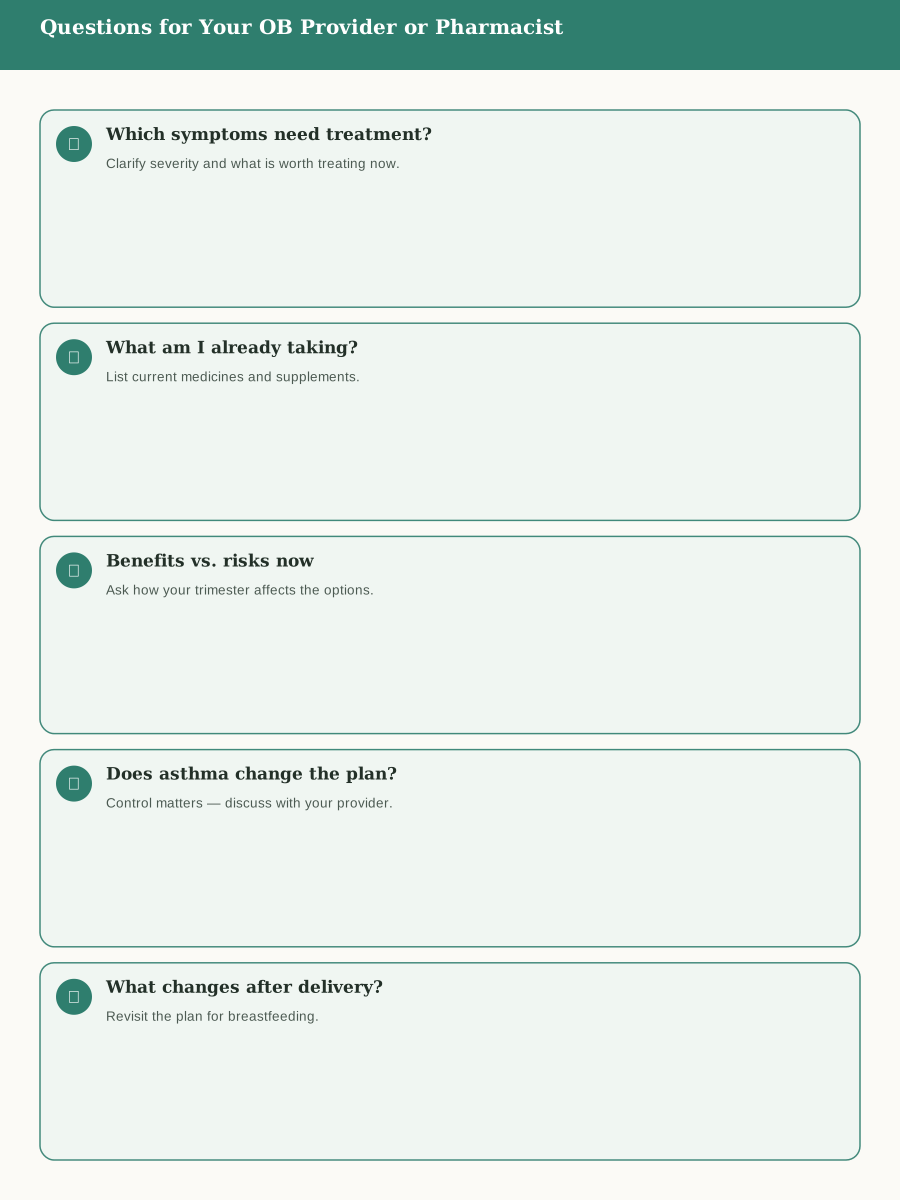
A short, focused conversation can go a long way. Bringing specific questions to your prenatal visit or a pharmacist consultation helps you get guidance that's tailored to your situation instead of generic advice.
- Given my trimester and symptoms, what general categories of relief might be reasonable to consider, and what would you want to avoid right now?
- Should I try non-medication steps first, and how long should I give them before checking back in?
- I was already taking an allergy or asthma medication before I found out I was pregnant, should I continue it, adjust it, or stop it?
- Do my symptoms sound like allergies, pregnancy rhinitis, or something else, like a sinus infection?
- Given my asthma and allergy history, would it help to also see an allergist or pulmonologist during this pregnancy?
- Are there any over-the-counter products, herbal remedies, or supplements I should specifically check with you before trying?
- What symptoms should prompt me to call you right away instead of waiting for my next scheduled visit?
After Delivery: Breastfeeding Involves a Different Set of Considerations
Once your baby arrives, the questions around allergy medication shift again. Medication decisions during breastfeeding depend on different factors than during pregnancy, since substances move into breast milk differently than they cross the placenta. Rather than duplicating that guidance here, see our dedicated page on allergy medicine while breastfeeding when that stage applies, and plan to revisit the medication conversation with your provider around the time of delivery.
Red Flags That Need Prompt Obstetric Attention
Most allergy symptoms during pregnancy are manageable and can be discussed at a routine or soon-after visit. But some symptoms should prompt faster action, because they may signal a breathing problem, a severe allergic reaction, or an asthma flare that needs immediate care rather than a wait-and-see approach.
- Difficulty breathing, shortness of breath, wheezing, or chest tightness.
- Needing a rescue inhaler more often than your asthma action plan allows, or it not working as well as usual.
- Swelling of the face, lips, tongue, or throat, especially with difficulty breathing or swallowing.
- Hives or a widespread rash appearing together with breathing trouble, dizziness, or swelling (possible signs of a severe allergic reaction, or anaphylaxis).
- A sudden decrease in your baby's usual movements, which should always prompt a call to your OB provider regardless of the cause.
When to seek care
Routine
Mild, predictable allergy symptoms, such as occasional sneezing or light congestion that doesn't interfere with sleep, eating, or daily activities, can typically be mentioned at your next scheduled prenatal visit.
Prompt (within days)
Symptoms that are persistent, gradually worsening, disrupting your sleep or eating, or not improving with non-medication steps are worth a call to your OB provider or pharmacist before your next routine appointment.
Urgent (same day)
New or worsening asthma symptoms, more frequent need for a rescue inhaler, or allergy symptoms accompanied by fever, facial pain or pressure, or thick discolored nasal discharge (which may suggest a sinus infection) should be evaluated within about a day.
Emergency (call 911)
Difficulty breathing, wheezing, chest tightness, swelling of the lips, tongue, or throat, or other signs of a severe allergic reaction call for immediate emergency care. Call 911 or go to the nearest emergency department.
Practical next steps
Safe general steps
- Track which triggers, such as pollen, dust, pet dander, or mold, seem to worsen your symptoms.
- Try saline nasal rinses or sprays for congestion relief.
- Reduce indoor allergen exposure with a HEPA filter and regular cleaning.
- Keep a simple symptom log (what, when, how severe) to share with your OB provider.
- Attend your routine prenatal visits and mention allergy or asthma symptoms even if they seem minor.
Actions that need medical guidance
- Starting, continuing, or stopping any allergy medication, including over-the-counter products.
- Using decongestants or combination allergy/cold products.
- Adjusting asthma medications or updating your asthma action plan.
- Continuing or starting allergy shots (immunotherapy) during pregnancy.
- Using herbal supplements or 'natural' allergy remedies you haven't discussed with a provider.
Don't attempt without professional advice
- Do not decide on your own whether your congestion is allergies versus pregnancy rhinitis versus a sinus infection if symptoms are significant, ask your provider.
- Do not stop a prescribed asthma or allergy medication abruptly on your own without talking to your OB provider first.
- Do not assume an OTC product's pre-pregnancy label guidance still applies without checking with your pharmacist.
- Do not ignore breathing difficulty or a worsening asthma pattern out of concern about taking medication; uncontrolled symptoms carry their own risks.
Frequently asked questions
Can pregnancy make allergy symptoms worse?
Is it safe to take allergy medicine while pregnant?
What can I do for allergies during pregnancy without medication?
I have allergic asthma. Does pregnancy change how I should manage it?
Will my allergy medication routine need to change once I start breastfeeding?
When should I seek emergency care for allergy or asthma symptoms during pregnancy?
Sources
- ACOG (American College of Obstetricians and Gynecologists) — What medicine can I take for allergies while I'm pregnant?
- ACAAI (American College of Allergy, Asthma and Immunology) — Pregnancy and Allergy
- FDA — Medicine and Pregnancy
- MedlinePlus (NIH/National Library of Medicine) — Pregnancy and Medicines
- CDC — Medicine and Pregnancy: An Overview
Medical disclaimer: This guide is for general education and isn't a substitute for personalized medical advice. It doesn't provide dosing. Always talk to a qualified healthcare professional about your symptoms and treatment.
Continue building your allergy plan
Explore related guides to understand the full picture, from triggers to treatment to safety.
Go to the treatment & relief guide